3D Illustration of Ad Targeting Concept
In the ever-evolving world of digital marketing, visual content plays a crucial role in capturing attention and delivering messages effectively. One powerful design asset that has gained traction is the 3D illustration of Ad Targeting Concept. This type of artwork visually represents how ads are strategically placed to reach specific audiences through modern platforms like social media, websites, and mobile apps. It's not just about eye-catching visuals; it's about communicating complex ideas in an engaging and intuitive way.
Visual Characteristics and Design Appeal
The 3D Illustration of Ad Targeting Concept typically features dynamic, layered elements that symbolize data streams, audience segments, and ad delivery mechanisms. Think of floating icons representing different demographics or geographic regions, interconnected by lines that suggest targeting algorithms and campaign flows. These illustrations often include vibrant colors, smooth transitions, and high contrast between background and foreground components to guide the viewer’s eye toward key areas.
What makes this 3D design particularly appealing is its ability to blend technical accuracy with artistic flair. The use of lighting effects and depth gives it a premium look, making it suitable for professional presentations and client proposals. Whether you're showcasing analytics dashboards or illustrating user behavior patterns, this concept helps simplify abstract data into digestible visual metaphors.
Personality and Style of the Illustration
This illustration exudes a sense of innovation and precision. Its style is clean yet futuristic, often leaning towards modern typography and sleek iconography. The personality of the artwork aligns well with brands in the tech, advertising, and SaaS industries—those that value clarity, performance, and a forward-thinking aesthetic. It doesn't overwhelm the viewer but instead invites them to explore the layers and connections within the image.
Where to Use the 3D Illustration of Ad Targeting Concept
These illustrations aren’t limited to one platform or project. Their versatility makes them ideal for multiple uses:
- Websites and Landing Pages: Highlight your company's targeting capabilities on service pages or home sections to build trust and showcase expertise.
- Social Media Graphics: Use them in carousel posts or infographic-style content to explain how your campaigns work in simple, visual terms.
- Banners and Ads: Incorporate these designs into promotional banners to represent data-driven strategies behind your offerings.
- UI/UX Design: As part of dashboard interfaces, they can help users understand where their ads are being displayed and how effective they are.
- Presentations and Reports: They add a professional touch to decks used in pitches or internal strategy meetings.
- Posters and Print Materials: When printed at high resolution, these illustrations maintain their impact and detail, making them great for trade shows or office spaces.
Because of their rich detail and structured layout, they also serve as excellent assets for brand identity systems, especially when paired with a strong typeface such as a sans serif font for readability or a display font for bold headlines.
Design Observations and Recommendations
When using the 3D Illustration of Ad Targeting Concept, consider the context and color scheme of your project. A minimalist website might benefit from a subdued version of the illustration with transparent backgrounds, while a promotional poster could leverage full-color vibrancy to stand out.
A practical tip is to pair this illustration with complementary design assets, such as flat icons or motion graphics, to enhance storytelling. For example, if you're creating a presentation on digital marketing trends, layering the illustration with a timeline graphic or flowchart can provide a more immersive experience for your audience.
Enhancing Readability and Brand Perception
While the illustration itself is visual, its placement and integration with text matter significantly. Pairing it with clear, concise copy ensures your message isn't lost in the artistry. Using a premium font for headlines and a sans serif font for body text can balance creativity with readability, especially when presenting detailed information.
From a branding perspective, consistent use of this illustration across materials reinforces your company’s commitment to data-driven marketing. It adds a layer of professionalism and modernity, which is essential for building credibility in competitive markets. Over time, this imagery becomes part of your brand recognition, helping viewers quickly associate your visuals with your services.
Commercial Licensing and Project Fit
If you're considering using the 3D Illustration of Ad Targeting Concept in commercial projects, always check the licensing agreement provided with the file (whether it's in JPG, PNG, PSD, or BLENDER format). Most premium design resources offer flexible usage rights, but it's important to confirm if it can be used for web, print, or product packaging without restrictions.
To evaluate whether this illustration fits your project, ask yourself:
- Does it align with my brand’s visual tone and message?
- Will it support the narrative I’m trying to convey?
- Is the level of detail appropriate for the medium (e.g., screen vs. print)?
For instance, if you're designing a brochure for a local business, a simpler version of the illustration may be better. Conversely, for a high-end digital marketing agency, the full complexity of the 3D rendering can demonstrate sophistication and technological prowess.
Exploring the Digital Marketing 3D Illustration
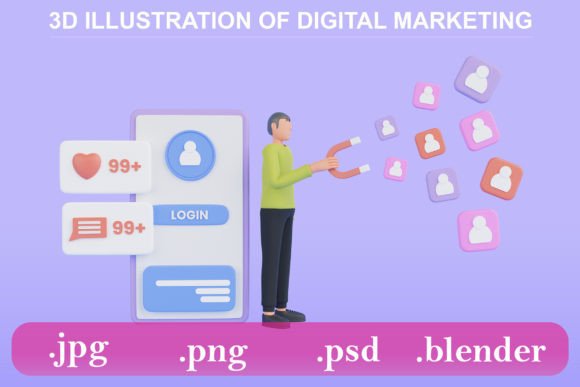
The broader 3D illustration of Digital Marketing offers similar benefits but expands on the theme to cover online presence, engagement, and conversion. These illustrations might depict a person interacting with a smartphone, a globe connected by digital networks, or a funnel showing customer journey stages. Each element is rendered with depth and realism to reflect the multi-dimensional nature of digital campaigns.
Such illustrations work exceptionally well in editorial design, where they can break up long blocks of text and introduce visual interest. In blog posts or whitepapers discussing topics like SEO or email marketing, they can make complex concepts more accessible and memorable.
Practical Applications and Examples
Here are some real-world examples of where this kind of 3D illustration shines:
- Agency Websites: Showcasing case studies with a background of the Ad Targeting Concept illustration instantly communicates specialization and effectiveness.
- Email Newsletters: Adding subtle 3D elements can elevate the perceived value of your content, encouraging higher open and click-through rates.
- Infographics: Combining data points with 3D renderings creates a compelling story that’s easy to follow and visually stimulating.
- Product Packaging: If you're launching a tool or software related to ad targeting, this illustration can become part of the package design, reinforcing the product's purpose.
Another advantage is the variety of formats available—JPG, PNG, PSD, and BLENDER files allow designers to modify and animate the illustration as needed. For those who want to integrate the design into interactive elements, the BLENDER format opens the door to customization and scalability.
Choosing the Right Typography to Complement the Illustration
Typefaces play a big role in how your message is received alongside these illustrations. A modern sans serif font pairs best with the clean lines and geometric shapes found in most 3D designs. However, don't be afraid to experiment with a script font or handwritten font for softer, more human-centric messaging—just ensure legibility remains intact.
When selecting fonts, consider font pairing techniques to create contrast and hierarchy. For example, using a bold display font for headlines against a lighter, more readable typeface for supporting text keeps the focus on the right elements. Also, remember that consistency in typography across all materials strengthens brand identity.
Readability Considerations
Even the most stunning illustration can lose its impact if the accompanying text is hard to read. Always test how the illustration interacts with your chosen fonts. Avoid placing text over busy parts of the design unless you have sufficient contrast and spacing. Tools like Adobe Photoshop or Illustrator can help you overlay text and adjust opacity or blurring to maintain clarity.
Additionally, consider accessibility. Ensure that any text used in conjunction with the illustration meets contrast standards and is large enough to be easily read across devices. This small step can greatly improve audience engagement and user experience.
Conclusion: A Strategic Design Asset
The 3D Illustration of Ad Targeting Concept is more than just a pretty image—it's a strategic tool that enhances communication, builds brand perception, and supports a wide range of creative and commercial applications. Whether you're a designer, marketer, or entrepreneur, integrating this type of illustration into your workflow can help you present complex ideas with clarity and confidence.
By understanding the visual language of these illustrations and choosing the right supporting typography and design assets, you can create content that resonates with your target audience and stands out in today's crowded digital landscape. So next time you’re working on a campaign or presentation, consider how a 3D illustration might bring your message to life in a way that static images simply can’t.