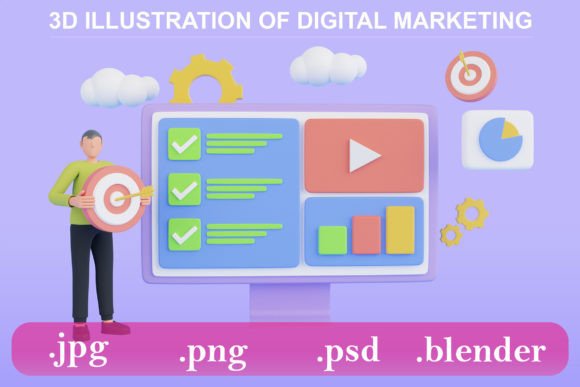
3D Strategy and Planning Website: Visualizing Success in 3D
In the evolving world of digital design and online marketing, the 3D Strategy and Planning Website concept has emerged as a powerful way to present complex ideas with clarity and impact. This innovative approach combines the visual appeal of three-dimensional illustration with strategic thinking, offering a unique tool for creators, marketers, and designers who want to stand out. Whether you're building a website, crafting promotional materials, or optimizing for SEO, 3D elements can help you communicate more effectively while engaging your audience in new ways.
What Is a 3D Strategy and Planning Website?
A 3D Strategy and Planning Website uses 3D illustrations and renderings to represent digital strategies, marketing plans, or project roadmaps. These visuals often include floating elements such as data charts, timelines, icons, and interactive components that give users a dynamic view of how different parts of a strategy connect. Unlike traditional 2D layouts, 3D designs add depth and perspective, making abstract concepts feel tangible and easier to grasp.
These websites are especially useful for businesses or professionals involved in digital marketing, web development, UI/UX design, and content strategy. The 3D environment allows for creative storytelling, where each element can be positioned to reflect its role within the overall plan. For example, a timeline might rise like a staircase, or a funnel could tilt forward to show conversion stages.
Creative Possibilities with 3D Illustration
With access to 3D illustration files in formats like JPG, PNG, PSD, or even editable BLENDER files, the potential for customization is immense. Here are some creative directions you can explore:
- Banners and Promotions: Use the 3D layout to create eye-catching banners for campaigns. Floating icons and layered text can highlight key points without overwhelming the viewer.
- Websites and Landing Pages: Incorporate 3D elements into your site’s homepage or landing pages to guide users through your services visually. A 3D roadmap or funnel can serve as both decoration and information architecture.
- UI/UX Design: Develop user interfaces that simulate 3D environments for a modern look. Interactive 3D buttons, scroll animations, and spatial navigation can enhance user experience.
- Posters and Presentations: Print the 3D illustration as a poster or embed it in a presentation to explain marketing strategies in a visually compelling way.
Real-World Applications for Different Audiences
The beauty of a 3D Strategy and Planning Website lies in its adaptability. Depending on your goals and audience, you can tailor the design to suit various contexts:
For Marketers and Business Owners
Use the 3D illustration to showcase your digital marketing process. You could build a digital screen 3D illustration featuring a video player showing campaign results, a gallery of social media posts, and floating analytics to demonstrate ROI. This not only makes your strategy more digestible but also positions you as a forward-thinking professional.
For Designers and Developers
If you're a designer or developer, the 3D illustration becomes a canvas for experimentation. You might use it to prototype a new website layout, test different color schemes, or integrate motion graphics. The development and SEO analysis concept within the illustration can evolve into a live dashboard or interactive module for clients to track progress.
For Educators and Trainers
Teach marketing or business strategy using a 3D visualization. Break down topics like SEO optimization, customer journey mapping, or content calendars by placing them in different layers of the 3D scene. Students can interact with these elements, rotating the view or zooming in to understand each part better.
For Freelancers and Small Businesses
Freelancers can leverage this design to build portfolios that reflect their versatility. Showcasing a 3D layout helps clients visualize what's possible when they work with you. Small businesses, especially those in tech or creative industries, can use it to simplify their branding and planning processes, making them appear more innovative and organized.
How to Adapt 3D Strategy Designs for Your Needs
To get the most out of your 3D illustration, consider these practical steps:
- Understand the Structure: Open the BLENDER file and identify which elements are modular. This will let you adjust specific parts—like adding your brand colors or changing the shape of the funnel.
- Align with Your Message: Every floating element should support your core message. If you're promoting an SEO service, place keywords, backlinks, and traffic metrics at the forefront of the design.
- Optimize for Clarity: Avoid overloading the illustration with too many details. Keep the hierarchy clear so viewers don’t get lost in the visual complexity.
- Export for Multiple Uses: Save the design in various formats (JPG, PNG, PSD) to ensure it works across platforms. High-resolution images are ideal for print, while vector-based versions can be used for scalable web assets.
- Test Interactivity: If you’re building a website, consider integrating hover effects or clickable zones within the 3D render. This adds another layer of engagement and helps guide users through your content.
Examples of 3D Strategy in Action
Here are a few real-world examples of how a 3D Strategy and Planning Website might be used:
- Marketing Agency Dashboard: An agency might use a 3D layout to show clients how their campaigns are structured, from ideation to execution, with each stage represented by a distinct 3D object.
- Startup Pitch Deck: Entrepreneurs can include a 3D illustration in their pitch decks to visualize growth strategies, product development cycles, or market positioning in a single glance.
- Educational Resource: A blog post about SEO optimization could feature a 3D illustration of a search engine funnel, with each level labeled and explained for easy understanding.
- Product Launch Page: A company launching a new app might use a 3D layout to walk users through features, benefits, and the download process—all in one immersive visual.
Making It Audience-Friendly and Effective
While 3D illustrations are visually striking, their effectiveness depends on how well they align with your audience’s needs. Consider the following tips to keep your design both original and accessible:
- Simplify the Narrative: Even with depth and perspective, your message must remain straightforward. Label each section clearly and use intuitive symbols to avoid confusion.
- Balance Style and Substance: Don’t sacrifice readability for aesthetics. Choose a style that complements your content—minimalist if you're focusing on data, bold and colorful for a more energetic brand identity.
- Stay Consistent: Ensure that all variations of your 3D illustration follow a consistent theme. This helps reinforce your brand and improves recognition across different platforms.
- Focus on Purpose: Ask yourself: What do I want the viewer to take away? If it's to understand a strategy, make sure the flow is logical. If it's to inspire action, highlight the next steps clearly.
Why 3D Works for Digital Marketing
Digital marketing is all about standing out. In a sea of flat graphics and stock photos, a 3D illustration can capture attention and convey professionalism. It’s particularly effective for explaining SEO optimization because it allows you to visualize how content ranks, links interconnect, and user behavior changes over time.
Moreover, 3D designs offer a sense of movement and interaction. When paired with animation or scrolling effects, they become memorable and shareable—qualities that are essential for modern digital marketing. Think of it as turning a static infographic into an immersive experience.
Getting Started with Your Own 3D Strategy Visualization
If you're ready to bring your ideas to life using a 3D Strategy and Planning Website, here’s how to start:
- Define Your Goals: Are you using this for client presentations, internal planning, or public promotion? Knowing your purpose will guide your design choices.
- Select the Right Tools: If you have access to a BLENDER file, you can tweak the model directly. Otherwise, use graphic tools like Photoshop to edit the PNG or JPG version and add your branding.
- Collaborate Across Teams: Share the 3D illustration with your team members—marketers, developers, and content creators—to gather feedback and ensure alignment with your strategy.
- Integrate with Other Assets: Combine the 3D illustration with videos, infographics, or written reports to create a cohesive package. This is especially helpful for proposals or educational content.
Final Thoughts on Creative Strategy with 3D
The 3D Strategy and Planning Website isn’t just a visual gimmick—it’s a functional and versatile tool that can elevate your digital presence. By thoughtfully adapting the 3D illustration to your specific needs, you can create a resource that informs, engages, and inspires. Whether you're designing for a client, teaching a class, or managing your own marketing efforts, this kind of visualization offers a fresh perspective on how to plan and execute your ideas.
So, dive into the possibilities. With the right mindset and tools, you can transform abstract strategies into compelling 3D experiences that resonate with your audience and drive real results.