3D Rendered Bowling Set for Design: Enhancing Creativity and Realism in Visual Projects
Bowling is more than just a popular sport; it's an activity that combines precision, strategy, and entertainment. Whether you're visualizing a championship event, designing an indoor sports facility, or creating promotional materials for a bowling tournament, the right visual assets can make all the difference. A 3D rendered bowling set offers a powerful solution for designers, educators, marketers, and hobbyists alike. These high-quality digital models bring realism and flexibility to your creative projects, allowing for detailed customization and seamless integration into various design workflows.
What Is a 3D Rendered Bowling Set?
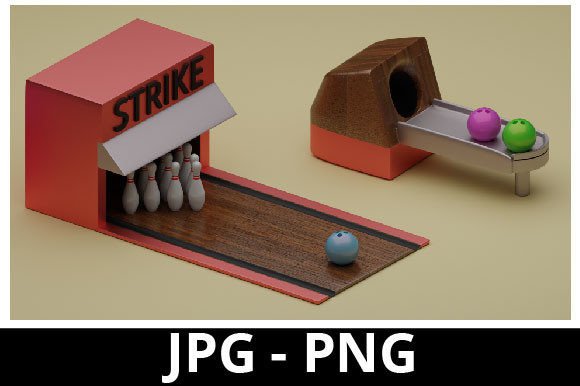
A 3D rendered bowling set typically includes a comprehensive collection of three-dimensional objects representing the essential components of a bowling alley. This may include the wooden lane, ten striped pins, a polished bowling ball, and even background elements like lighting fixtures or spectator seating. Each object is crafted with attention to detail, ensuring accurate textures, proportions, and colors that mirror real-world counterparts.
The ZIP folder containing these renderings often features multiple formats such as JPG and PNG, offering versatility in how they can be used across different platforms and software. The term “3d render” refers to the process of generating a photorealistic image from a 3D model using specialized rendering software. In the case of a 3D rendered bowling set, this means each frame captures the depth, motion, and interaction of objects within a virtual bowling environment.
Applications Across Industries
The use cases for a 3D rendered bowling set are diverse and extend beyond the realm of gaming. Here are some industries where these visuals prove invaluable:
- Marketing and Advertising: Businesses promoting bowling lanes, tournaments, or related products can leverage 3D renderings to create compelling advertisements. High-resolution images of a successful strike or a fast roll down the lane can capture viewer attention and convey excitement effectively.
- Architectural and Interior Design: When planning new indoor bowling centers or renovating existing ones, 3D models help visualize space layout, lighting, and furniture placement. They allow designers to experiment with different configurations before finalizing the blueprint.
- Education and Training: Educators can use 3D rendered scenes to teach principles of physics, geometry, and sports mechanics. For instance, analyzing the trajectory of a ball's throw or the angle of a pin’s fall can provide practical learning experiences in STEM fields.
- Game Development: Game creators benefit from pre-rendered sets when building realistic environments for bowling simulations. These models can be easily imported into game engines, reducing development time while maintaining visual fidelity.
- Graphic Design and Branding: From social media posts to print materials, 3D rendered images of a bowling set can add a dynamic touch to any project. The ability to manipulate lighting, angles, and backgrounds makes them ideal for custom branding efforts.
Advantages of Using 3D Rendered Assets
Utilizing a 3D rendered bowling set provides several benefits over traditional photography or hand-drawn illustrations:
- High Customization: With a 3D model, you have full control over every element—lighting, camera angles, color schemes, and even the type of wood grain on the lane. This level of flexibility ensures your design aligns perfectly with your vision.
- Consistency and Accuracy: Every component in the set maintains precise measurements and realistic behavior. Whether you’re illustrating a straight shot or a curved roll, the physics remain true to life, enhancing the educational or competitive value of your content.
- Time and Cost Efficiency: Creating physical setups for photoshoots can be expensive and time-consuming. A 3D set allows you to generate multiple variations quickly without logistical constraints.
- Enhanced Realism: The textures and lighting in 3D renders mimic real-world materials and conditions. For example, the glossy surface of a 3D bowling ball or the subtle shadows cast by the pins during a hit contribute to an immersive experience.
- Scalability: Whether you need a close-up of the ball hitting the pins or a wide-angle view of a full bowling tournament setup, 3D renderings can scale effortlessly to meet your needs.
Use Cases in Creative Projects
Here are some specific examples of how professionals and enthusiasts can integrate a 3D rendered bowling set into their work:
- Website and Social Media Content: Use the images to highlight fun activities at local bowling alleys or promote a championship event. A well-composed render of a strike sequence can serve as a focal point for a campaign aimed at increasing engagement and participation.
- Product Packaging and Merchandise: Incorporate the imagery into branded merchandise like t-shirts, posters, or promotional items. The visual appeal of a 3D scene showing a successful score adds a professional and eye-catching dimension to any product line.
- Virtual Reality (VR) and Augmented Reality (AR): Developers working on immersive applications can utilize the 3D models to simulate realistic bowling environments. Users can practice accuracy, speed, and technique in a virtual setting, making it perfect for training or casual play.
- Print and Video Production: In video editing or print design, these assets can be layered to create engaging transitions or storyboards. A slow-motion render of a ball hitting the target pins can emphasize the thrill of the game and the skill involved in achieving a strike.
Key Features to Look For
When selecting a 3D rendered bowling set for your design project, consider the following features to ensure it meets your needs:
- Resolution and Format: High-resolution JPG and PNG files are standard for most design purposes. Make sure the package supports the format required by your software or platform.
- Model Detail: Look for assets with fine textures and realistic material properties. The wooden lane should reflect grain patterns, and the pins must show clear markings and reflective surfaces.
- Scene Variety: Some packages offer multiple scenes, such as a quiet indoor lane or a bustling championship setup. Having access to different environments expands your creative options significantly.
- Animation Potential: If your project involves motion, choose a set that allows for animation. The ability to depict a ball rolling toward the pins or a pin falling after being hit can elevate the storytelling aspect of your design.
- Compatibility: Ensure the 3D models or renderings are compatible with your preferred design tools. Popular formats like OBJ or FBX are commonly supported by major 3D modeling and rendering software.
Design Considerations and Best Practices
To get the most out of a 3D rendered bowling set, it's important to understand how to incorporate it effectively into your workflow:
- Define Your Purpose: Are you aiming to educate, entertain, or market? Clarifying your objective will guide your choice of scene, lighting, and composition.
- Match the Style: Adjust the lighting and color grading to match the overall tone of your project. A dramatic spotlight on the ball during a throw can evoke tension, while soft ambient lighting might suggest relaxation and leisure.
- Focus on Composition: Position the camera to highlight key moments in the game, such as the ball's path, the pins' alignment, or the expression of a bowler preparing for a shot. Good composition enhances clarity and visual impact.
- Combine with Other Elements: Don’t hesitate to blend the 3D renderings with other graphics or text. Adding motivational phrases like “Win the Game” or “Perfect Your Roll” alongside the visuals can reinforce the message of your design.
- Test Across Platforms: Before finalizing your project, preview the images on different screens and devices. Ensuring visibility and quality across all mediums is crucial for maintaining professionalism.
Who Can Benefit from This Resource?
A 3D rendered bowling set is not limited to one group of users. Its utility spans across multiple professions and hobbies:
- Professionals: Marketing teams, architects, and game developers can streamline their design processes and deliver visually rich content efficiently.
- Consumers: Individuals interested in home entertainment systems or DIY décor can use the images to plan and personalize their spaces with a sports-themed flair.
- Creators: Graphic designers, YouTubers, and bloggers can enhance their storytelling with dynamic and realistic visuals that engage their audience.
- Educators: Teachers and professors can demonstrate complex concepts through interactive 3D scenes, helping students grasp ideas like force, motion, and spatial relationships more intuitively.
- Researchers: Those studying sports dynamics or biomechanics can analyze the interactions between the ball and pins in a controlled digital environment.
- Hobbyists: Enthusiasts who enjoy playing or watching bowling can explore the sport creatively, whether for personal art projects or online content sharing.
- Business Owners: Entrepreneurs running bowling centers or launching new ventures in the sports industry can showcase their offerings with professional-grade visuals, improving customer attraction and retention.
Real-World Examples of Effective Usage
Let’s look at a few scenarios where a 3D rendered bowling set has been successfully applied:
- A local bowling alley used a series of 3D renders in their website redesign. By showcasing the interior with realistic lighting and crowd elements, they increased foot traffic and membership sign-ups by 25% within six months.
- An e-learning platform integrated 3D bowling animations into their physics curriculum. Students were able to observe and calculate angles, speed, and momentum in action, leading to improved comprehension and test scores.
- A mobile game developer included a 3D rendered ten-pin bowling set in their simulation app. The realistic ball movement and pin reactions made the game more immersive, resulting in higher user ratings and extended gameplay sessions.
Choosing the Right Package for Your Needs
Not all 3D rendered sets are created equal. When choosing a package labeled as “3D rendered bowling set perfect for design project,” evaluate the contents based on your requirements:
- Number of Objects: Does the set include all necessary components such as the lane, ball, pins, and scoring displays? A complete set reduces the need for additional sourcing.
- Quality of Textures: Inspect sample images to check for clarity and realism. The wooden texture of the lane and the metallic sheen of the ball are critical for authenticity.
- Scene Types: Some packages offer multiple scene variations, including night lighting, spectator views, or abstract designs. Choose the one that complements your intended outcome best.
- License Terms: Confirm whether the package allows commercial use, redistribution, or modifications. Understanding the licensing agreement prevents legal issues later on.
- Support and Documentation: Opt for sets that come with user guides or technical support. This helps you navigate the files and maximize their potential without unnecessary delays.
Integrating the Set Into Your Workflow
Once you’ve acquired the ZIP folder with the 3D rendered bowling set, here’s how to begin using it:
- Extract the Files: Open the ZIP folder and organize its contents based on file types and usage intentions.
- Import Into Software: Use graphic design or 3D modeling software such as Adobe Photoshop, Blender, or Cinema 4D to import and edit the models or images.
- Adjust Lighting and Camera Angles: Experiment with different settings to create the desired mood and perspective. A low-angle shot of a ball mid-roll can emphasize speed and intensity.
- Add Background Elements: Place the set against relevant backdrops such as a sports arena, a retro-style bowling alley, or a modern urban environment to diversify the context.
- Export and Apply: Once satisfied with the arrangement, export the final render in the appropriate format and resolution for your platform or project.
Why Go 3D?
In today’s digital landscape, 3D rendered content is becoming increasingly essential. It bridges the gap between imagination and reality, allowing for precise visualization without the limitations of physical production. A 3D rendered bowling set is no exception—it brings the essence of the sport into your creative domain with unmatched clarity and adaptability.
Whether you're aiming to improve your design portfolio, launch a marketing campaign, or develop an educational resource, having access to a versatile and realistic 3D set can transform your approach. The ability to manipulate light, shadow, and perspective gives you the freedom to tell a story, present data, or simply create something beautiful and functional.
With the rise of remote work and digital collaboration, having a reliable set of 3D assets like the 3D rendered bowling set ensures that your team can work efficiently from anywhere. No longer constrained by location or availability of physical props, you can focus on innovation and execution.
Final Thoughts
As technology continues to evolve, so do the possibilities for integrating 3D rendered visuals into everyday projects. A 3D rendered bowling set is more than just a collection of images—it’s a tool that empowers creators to bring their ideas to life with precision and flair. From the thrill of a tournament win to the quiet satisfaction of a well-placed strike, these visuals capture the spirit of the game in ways that resonate with audiences across industries.
By investing in a high-quality 3D rendered set, you gain access to a world of creativity and realism. Whether you're a designer, educator, marketer, or hobbyist, this resource opens doors to new opportunities and innovative presentations. Embrace the power of 3D rendering and elevate your next project with the ultimate visual representation of bowling excellence.